A strong website should make your business easier to trust, easier to find, and easier to buy from. If your current site looks fine at first glance but still fails to generate qualified leads, the problem may not be your market, your offer, or your ad budget. It may be the team responsible for the strategy, design, development, and optimization behind it.
Choosing a new web design agency is a serious decision, especially if you have already invested time and money into your current website. But staying with the wrong partner can be even more expensive. Poor UX, slow load times, weak technical SEO, and unclear conversion paths quietly drain revenue month after month.
Here are seven signs you need a better web design agency, plus what a stronger partner should do differently.
| Sign | What you might notice | Business risk |
|---|---|---|
| Visuals come before strategy | Pretty pages, weak messaging, unclear user paths | Visitors do not understand why they should choose you |
| Performance is poor | Slow pages, layout shifts, frustrating mobile experience | Lower engagement, fewer leads, weaker SEO foundations |
| SEO is bolted on later | No URL strategy, redirects, metadata, or crawl checks | Traffic drops, rankings stall, pages fail to get indexed |
| Content updates are painful | Every small edit requires a developer | Marketing slows down and costs rise |
| Conversions are not improving | Traffic exists, but forms, calls, and purchases lag | Your website becomes a cost center instead of a growth asset |
| Communication is vague | Missed timelines, unclear priorities, technical jargon | Projects drift and accountability disappears |
| Launch is treated as the finish line | No testing, support, or optimization plan | The site gets outdated quickly and performance declines |
1. They prioritize visuals over business outcomes
A visually appealing website matters, but design alone does not build trust, explain value, or convert visitors. If your agency talks mostly about colors, animations, trends, and layout preferences without asking about your sales process, customer objections, lead quality, or revenue goals, that is a red flag.
A better web design agency starts with business context. Before opening a design file, it should understand who your ideal customers are, what they need to believe before converting, how your competitors position themselves, and what action each key page should drive.
This is especially important for service businesses, B2B companies, local brands, and ecommerce websites where visitors often compare multiple options before taking action. Your homepage, service pages, landing pages, and contact forms should all work together as part of a conversion journey.
If your current agency cannot clearly explain how design decisions support trust, clarity, and lead generation, you may be paying for decoration instead of digital growth.
2. Your website is slow, unstable, or frustrating on mobile
In 2026, performance is not a technical luxury. It is part of the user experience. Visitors expect pages to load quickly, images to appear smoothly, buttons to respond instantly, and layouts to stay stable as content loads. If your website feels sluggish or awkward on a phone, many users will leave before they ever see your offer.
Speed also affects how search engines and users evaluate your site. The web.dev guide to Core Web Vitals explains key performance metrics such as loading speed, interactivity, and visual stability. These metrics are not the only factors that matter, but they are useful indicators of whether your site feels fast and reliable in real conditions.
Warning signs include oversized images, unnecessary scripts, slow hosting recommendations, weak caching, confusing mobile menus, buttons that are hard to tap, forms that are difficult to complete, and page sections that jump while loading.
A better agency treats performance as a requirement from the start. That means designing lean interfaces, building clean front-end code, optimizing media, testing across devices, and avoiding unnecessary plugins or design effects that make the site heavier without improving results.
3. SEO is treated as an afterthought
One of the clearest signs you need a better web design agency is hearing that SEO can be handled after the website goes live. For most businesses, that approach is risky. Search visibility depends on decisions made during planning, design, development, migration, and launch.
SEO-friendly web design includes clear site architecture, crawlable navigation, strong internal linking, optimized page titles and headings, clean URLs, schema where appropriate, fast performance, accessible content, and a redirect plan when pages change. If your agency redesigns pages without considering search intent or removes existing content without checking performance data, rankings can suffer.
This is especially dangerous during redesigns. A new site may look better, but if it loses valuable URLs, removes keyword-aligned content, or creates technical crawl issues, traffic can drop. If you are planning a larger rebuild, it is worth understanding how a website redesign can affect SEO rankings before approving a new structure.
A better web design agency does not promise instant rankings or guaranteed first-page results. Instead, it builds a technically sound foundation that gives your content and marketing a fair chance to perform.
4. You cannot update your own content without friction
Your website should not trap your marketing team. If every headline change, case study update, blog post, image replacement, or landing page edit requires a developer ticket, your site is slowing down your business.
This is common when agencies build websites that look custom but are difficult to manage. The problem is not custom design itself. The problem is a lack of thoughtful content structure, reusable components, clear admin workflows, and proper handoff.
Whether your site is built on WordPress, Webflow, or another platform, a better agency should consider how your team will use the website after launch. Can you publish new content easily? Can you edit service pages without breaking layouts? Are components flexible enough for future campaigns? Do you understand what is safe to change and what should stay controlled?
A website that depends on the agency for every small update may create recurring costs that were never discussed upfront. It also makes your marketing less responsive, which can hurt campaigns, sales enablement, hiring, and seasonal promotions.
5. The site looks polished, but conversions are weak
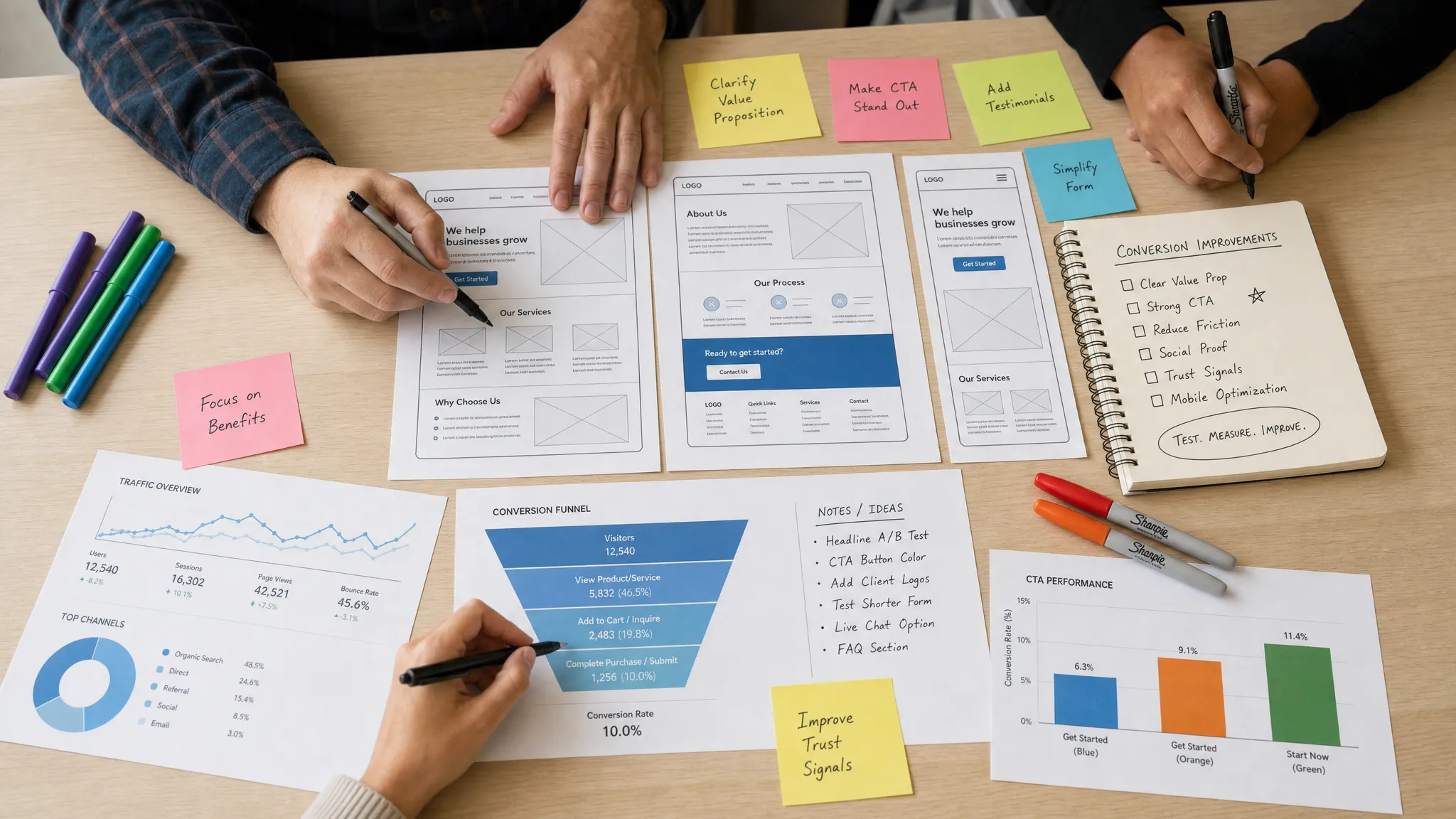
A beautiful website that does not convert is still underperforming. If traffic is steady but leads, calls, bookings, or purchases are not improving, your agency should be able to diagnose why.
Conversion-focused design is not about adding more buttons everywhere. It is about helping the right visitor make a confident decision. That includes clear positioning, persuasive service pages, strong calls to action, proof points, testimonials, case studies, trust signals, pricing context where relevant, and forms that do not create unnecessary friction.
If your current agency cannot explain what is preventing users from converting, or if it only suggests another redesign without looking at behavior and analytics, the process may be too subjective. Strong agencies use data, not just taste.
Common conversion problems include unclear value propositions, hidden CTAs, generic copy, cluttered navigation, weak mobile layouts, and long forms that ask for too much too soon. If those issues sound familiar, review these website design mistakes that kill conversions and compare them against your current site.
A better agency will connect design decisions to measurable outcomes. It should care not only whether the site looks modern, but whether visitors understand, trust, and act.
6. Communication feels reactive, vague, or overly technical
A web design project can involve strategy, copy, design, development, integrations, SEO, QA, migration, and launch planning. Without clear communication, even a talented team can become difficult to work with.
Signs of weak communication include missed deadlines without explanation, unclear ownership, surprise costs, vague feedback requests, delayed responses, and technical language that leaves you unsure what is happening. Another warning sign is when your agency waits for you to identify problems instead of proactively surfacing risks.
A better web design agency should make the process easier to understand. You should know what phase the project is in, what decisions are needed, what the next milestone is, and what trade-offs are being made. If a design choice affects performance, SEO, or content management, the agency should explain that clearly before implementation.
Good communication is not just about being friendly. It protects your timeline, budget, and final result. It also shows whether the agency sees itself as a vendor completing tasks or a partner responsible for outcomes.
7. They disappear after launch
Launch day should not be the end of the relationship. It is the moment your website starts facing real users, real search engines, real devices, and real business pressure.
If your agency hands over the site and disappears, you may be left with bugs, broken tracking, slow pages, unanswered CMS questions, and no plan for improvement. Even a well-built website needs post-launch checks, analytics review, technical monitoring, SEO validation, and ongoing optimization.
A better agency prepares for launch before launch week. It tests forms, checks mobile layouts, reviews redirects, confirms analytics, monitors speed, validates indexability, and helps your team understand how to manage the site. It should also help you decide what to improve next based on data rather than assumptions.
Sometimes the issue is not just the agency. Your business may have outgrown the original website strategy. If you are unsure whether you need a new agency, a new website, or both, this guide on when a website redesign makes sense can help clarify the decision.
What a better web design agency does differently
The right agency is not simply faster, cheaper, or more creative. It is better aligned with how your website supports business growth.
| Weak agency behavior | Better agency behavior |
|---|---|
| Starts with aesthetics | Starts with goals, users, positioning, and conversion paths |
| Builds pages in isolation | Designs the full customer journey across key touchpoints |
| Adds SEO after launch | Plans technical SEO, content structure, and redirects early |
| Uses performance as a final checklist item | Designs and develops with speed in mind from the beginning |
| Hands over a site without guidance | Provides launch support, documentation, and next-step recommendations |
| Reports activity only | Connects work to measurable outcomes such as leads, traffic quality, and engagement |
A strong agency will challenge assumptions when needed. It may tell you that your homepage message is unclear, your service pages are too thin, your navigation is confusing, or your requested animation could slow the site down. That honesty is valuable.
The best partner is not the one that says yes to everything. It is the one that helps you make smarter decisions.
How to decide whether it is time to switch
Before replacing your agency, give the relationship a fair evaluation. Share specific concerns, ask for a clear improvement plan, and see whether the team responds with ownership or excuses. A good agency will welcome clarity and address problems directly.
It may be time to switch if several of these statements are true:
- Your website has not improved leads, conversions, or qualified inquiries.
- Your agency cannot explain the strategy behind major design decisions.
- SEO, speed, accessibility, and analytics are treated as optional extras.
- You feel dependent on the agency for basic content updates.
- Communication issues are causing delays, confusion, or loss of trust.
- Your competitors have stronger, clearer, faster websites.
- You have no roadmap for post-launch growth or optimization.
If you are actively comparing partners, use a structured evaluation instead of relying only on portfolios. Asking the right questions upfront can reveal whether an agency understands business strategy, UX, SEO, and implementation. WebHivez has a helpful breakdown of 10 critical questions to ask a web design agency before you commit.
WebHivez builds high-performance websites with conversion-focused design, WordPress development, Webflow design, technical SEO, page speed optimization, and launch support. If you are unsure what is holding your current site back, start with a free audit and get a clearer path toward better performance.
Frequently Asked Questions (FAQs)
How do I know if I need a new web design agency or just a website redesign?
If the website is outdated but your agency is strategic, responsive, and technically capable, a redesign with the same partner may be enough. If the agency lacks strategy, communication, SEO knowledge, or performance discipline, switching agencies may be the better move.
What should a better web design agency help with besides design?
A stronger agency should help with business goals, user experience, conversion strategy, technical SEO, performance, content structure, development quality, testing, launch planning, and post-launch improvement.
Can a web design agency improve SEO?
Yes, a capable agency can improve the technical and structural foundations that support SEO, including speed, crawlability, mobile usability, URL structure, headings, internal links, and redirects. It should not promise guaranteed rankings.
Is it worth switching agencies mid-project?
It can be worth it if the project is off track, quality is poor, or trust has broken down. Before switching, gather files, contracts, credentials, design assets, staging access, and a clear record of completed work so the transition is smoother.
Should I choose an agency that specializes in WordPress or Webflow?
Choose based on your business needs, content workflow, scalability, and internal team. Platform knowledge matters, but strategy, UX, SEO, performance, and communication are just as important.