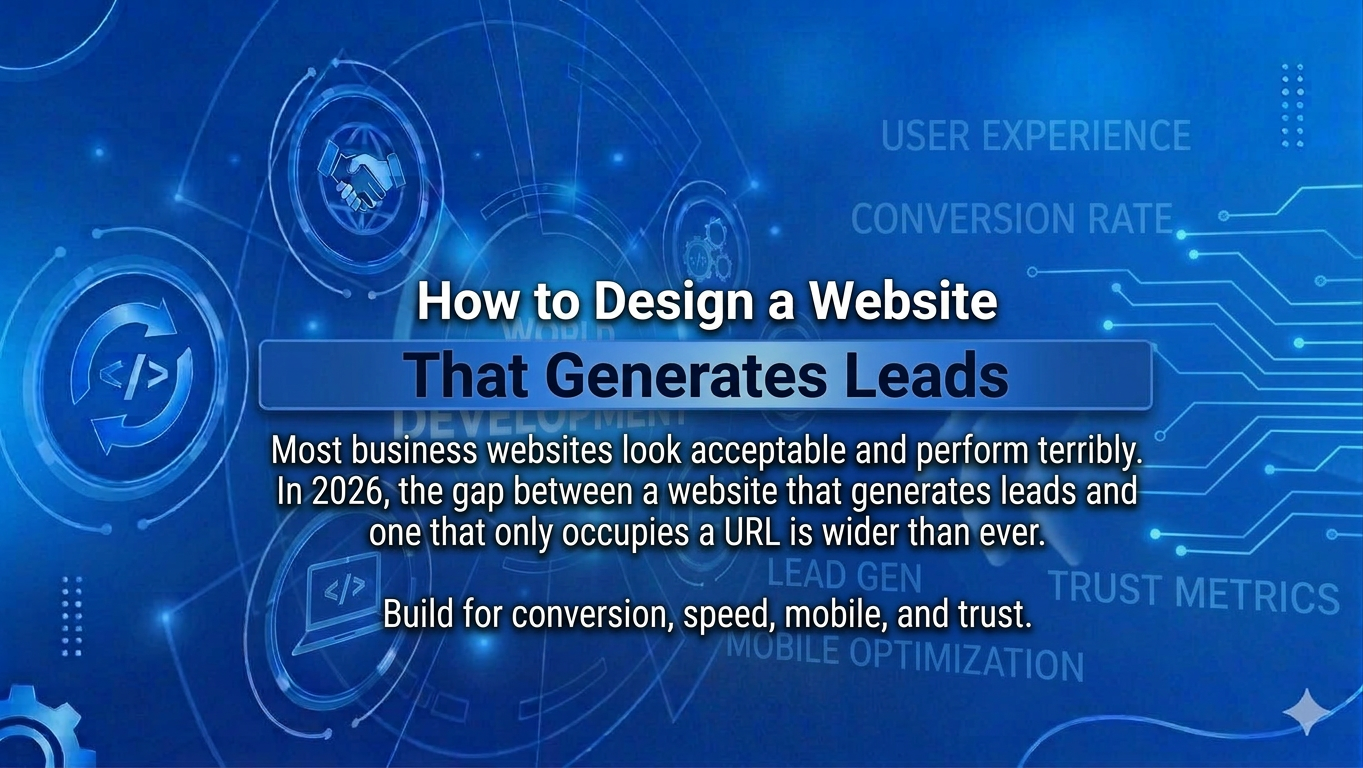
Most business websites look acceptable and perform terribly. In 2026, the gap between a website that generates leads and one that just occupies a URL has never been wider.
The Core Problem: Design for Aesthetics vs. Design for Conversion
A high-converting website isn’t the most visually impressive — it’s the one that moves visitors toward a desired action. Every element on every page has a job. Awards don’t pay salaries. Conversions do.
Our website design services start with conversion architecture — not mood boards.
5 Elements Every High-Converting Website Has in 2026
1. A Value Proposition Visible in Under 5 Seconds
When a visitor lands on your homepage, they should immediately understand: what you do, who you do it for, and why you’re the best choice. Test your homepage with someone unfamiliar — give them 5 seconds, then ask what you do. If they can’t answer precisely, your value proposition needs work.
2. Mobile-First Execution
With 60%+ of web traffic on mobile, a site that’s an afterthought on small screens is losing more than half its conversions. Mobile-first means designing the phone experience first — not squishing a desktop layout onto a phone.
Related: Mobile-First Website Design: Why It Matters
3. Page Speed Under 3 Seconds
Every second of load time delay costs approximately 7% in conversions. A site scoring below 70 on Google PageSpeed is hemorrhaging leads before a single visitor sees your CTA. Performance optimization is not optional.
4. CTAs at Every Decision Point
Your calls-to-action should appear above the fold, after key benefit sections, after social proof, and at the bottom of every page. “Get Your Free Audit” beats “Contact Us” every time.
5. Trust Signals in the Right Places
Position social proof near your CTAs — not buried at the bottom. Testimonials, logos, case study metrics, and review counts all build trust at the moment doubt arises.
What High-Converting Websites Deliver
Industry average conversion: 1–3%. High-converting service pages: 3–7%. Well-optimized campaign landing pages: 5–15%. If your site converts below 1%, structural problems exist that no amount of traffic will fix.
Internal Links That Build Authority
Our conversion rate optimization service systematically addresses conversion gaps. For campaign pages, our landing page design applies these principles to dedicated pages.
Also read: How to Design a Website That Generates Leads
FAQ
What conversion rate should my website target?
For service businesses, 3–5% is strong. For campaign landing pages with targeted traffic, 8–15% is achievable.
Does website design impact SEO?
Yes — directly. Page speed, mobile usability, and technical structure are confirmed ranking factors.
How quickly can conversion rates improve?
CTA and copy improvements can show results in days. Structural redesigns typically show impact within 30–60 days of launch.
Request a free audit to see exactly what’s holding your current site back.